Category
Design System
Year
2025
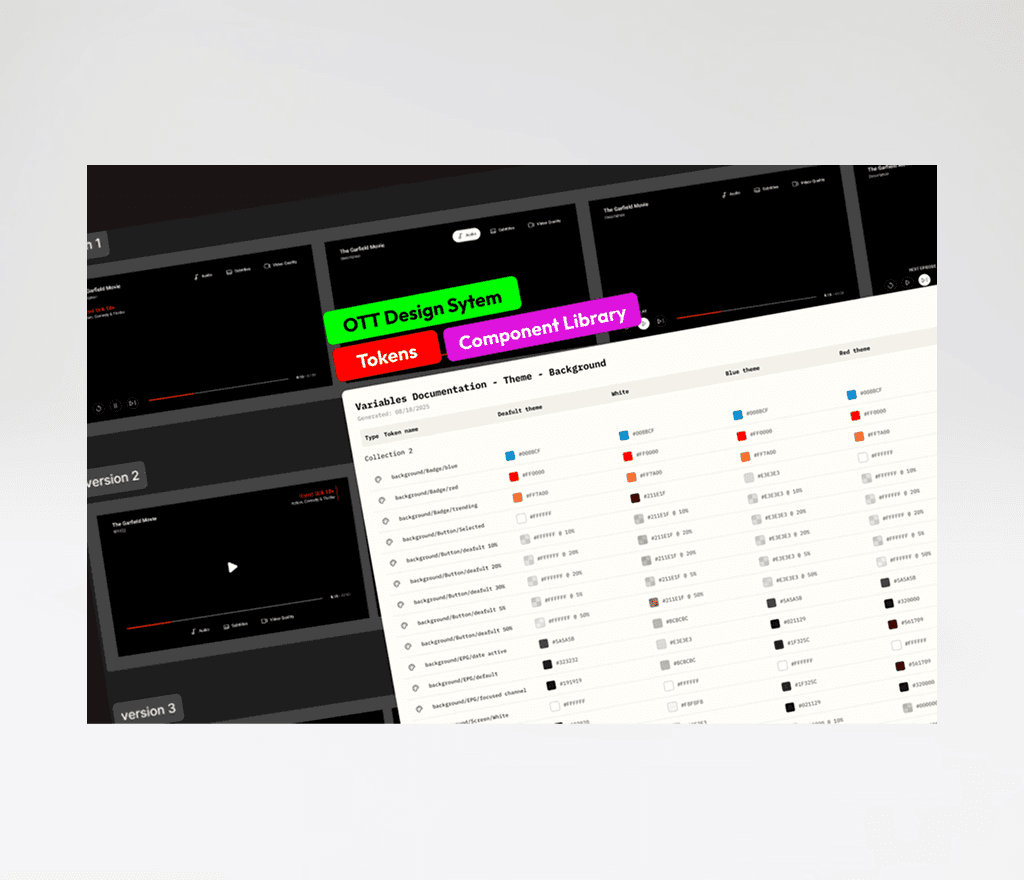
The OTT Design System was created to standardize and scale user experiences across TV, STB, Web, Mobile, Smart TV, and gaming consoles. The goal was to establish a unified design foundation covering navigation, movie cards, content rails, video player components, interaction patterns, and theming systems.
This system was built using token-driven architecture and reusable component libraries to ensure consistency, scalability, and faster feature rollout across multiple device ecosystems.
the challenge
The OTT ecosystem consisted of multiple platforms with inconsistent UI patterns, varying interaction behaviors, and fragmented design implementations, resulting in:
Cross-platform inconsistencies
Slower feature rollout
Repeated design efforts
Increased UX defects during releases
Theming complexity across brands and markets
The challenge was to build a centralized, scalable design system that could support multiple themes, device constraints, and remote-navigation interactions while maintaining visual and functional consistency.
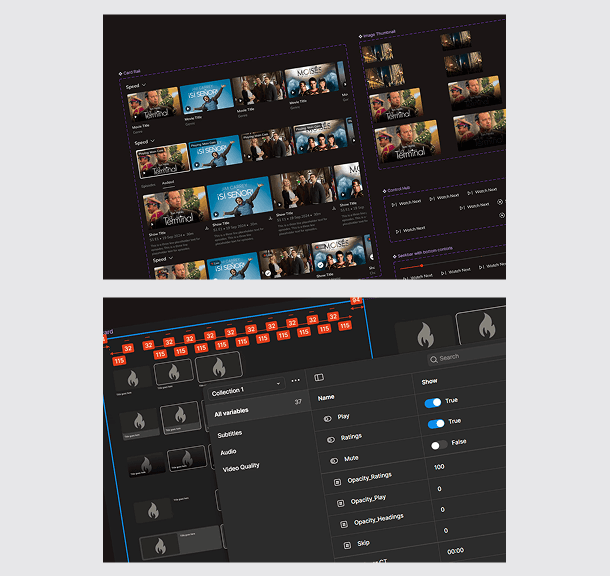
Architected a modular, token-driven design system covering color, typography, spacing, elevation, motion, and theming variables.
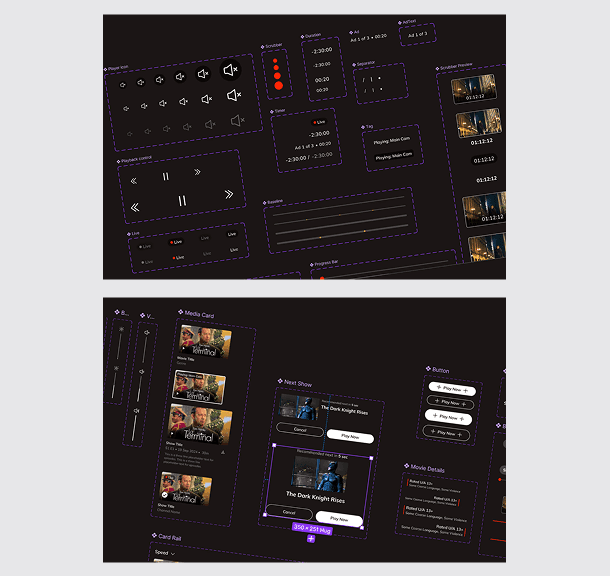
Standardized core components including movie cards, content rails, navigation layouts, and video player controls across platforms.
Reduced design-to-development inconsistencies through structured component documentation and reusable UI patterns.
Accelerated cross-platform rollout efficiency by enabling scalable component reuse.
Improved accessibility alignment and ensured consistent remote-navigation behavior for TV and non-touch environments.
conclusion
The OTT Design System transformed fragmented UI implementations into a unified, scalable framework. By introducing token-based architecture, standardized interaction models, and reusable component libraries, the platform achieved higher consistency, faster delivery cycles, and long-term scalability.
This project strengthened my expertise in system architecture, multi-platform UX strategy, and designing for large-scale content ecosystems.